
[A] newly promoted assistant manager, chosen by my most recent predecessor who stepped down but was still in the department, often told our shared staff that they should trust me, then proceeded to undermine me by giving them an outlet to complain about me instead of engaging me in conversation. – Respondent, Legacy Toxicity in Formal Leaders’ Low-Morale Experiences Ongoing Data Collection Project
White staff [are] hired and promoted more than non-white staff. Non-white staff had to interview for the same position numerous times to get hired or promoted. When I asked about statistics, HR/leadership claimed that those are “hard” to access. Problematic behaviors are also not addressed but swept under politics when staff wishing to address these issues are seen as problematic and kept from promotions. – Respondent, Red Flags of Low Morale Workplaces Ongoing Data Collection Project
These narrative data highlight ways that library workers who are focused on learning and/or doing their work to the best of their abilities or trying to improve their organizations – were set up to fail. Throughout my time researching and gathering experiences about employee exposure to workplace abuse and neglect (i.e., low-morale experiences), I’ve noted various ways these interruptions of employee success and engagement manifest, which I’ve categorized and placed under the broad banner of what I call GOTCHA Culture.
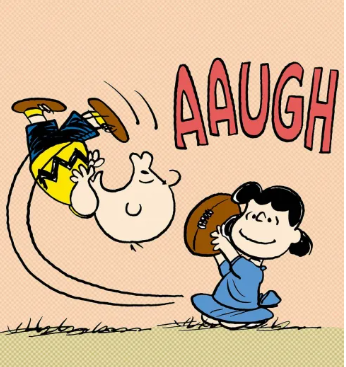
GOTCHA Culture workplace environments are characterized by implicit or explicit behaviors that undermine employees’ daily work or goals, and which place employees in lose-lose dilemmas. Within the context of low-morale experiences, these characteristics compound negative impacts on mental or physical health, workplace relationships, and career mobility or confidence, and have implications for hiring, recruitment, and retention. GOTCHA Culture also reveals that harm can happen to individuals before they join an organization, and underscores how ongoing harm potentially intensifies when employees’ decide to leave an organization: behaviors may manifest during before or during interviews, and others become (more) apparent during resignation periods. In the former case, awareness of GOTCHA Culture may help job-seekers improve their observation skills, prepare better questions, and increase their ability to honor their intuition during interview and hiring processes. In the latter case, knowledge of GOTCHA Culture may ease emotional and decision-making conflicts that harmed employees navigate when they are considering or enacting their exit plans.
In this first part, I’ll share three of six common elements of GOTCHA Culture, along with illustrative narrative data from various low-morale experience studies and projects.
Gatekeeping
“The supervisor that was supposed to be training me on [my] position…she was never really in that department. And she would even come out and say to me that she didn’t eve know about the library itself — like how the infrastructure was set up or even the call number system…then I got my evaluation [and] I was let go because the supervisor felt I wasn’t performing up to expectation. And I would say that in my defense, I wasn’t getting the same type of training that [other employees] had received.” – Participant, Academic Librarian Low-Morale Experience Study
Gatekeeping occurs when employees are kept from accessing information, spaces, or opportunities that will help them begin, continue, or complete assigned duties or improve their skills – or those opportunities are inequitably distributed due to favoritism, nepotism, or cronyism. This can also happen when potential employees aren’t given the information they need to prepare for interviews.
The catch: ill-implemented/unfairly launched Performance Improvement Plans, industrial or social inclusion (e.g., Oppressed Group Behavior; Mean Girls), toxic/ableist search processes leading to psychologically unsafe interviews.
Overwork
“My first week on the job, the board chair took me aside and said, ‘I really think that for you to accomplish everything that you need to accomplish in this job, you’ll probably be working 70 hours a week’… He wanted me to just put in 70 hours and didn’t tell me what specifically he meant. I worked long hours, weekends – I started to feel burnt out and like I was not doing a good job. I developed chronic migraines…But they stopped immediately after I left that job.” – Participant, Formal Library Leader Low-Morale Experience Study
This characteristic surfaces when employees are implicitly or explicitly expected to accept and engage in workaholism. Understaffing, co-opting family rhetoric, intimidation, exploitation of professional identities, or valorization of pushing through are common mechanisms organizations use to normalize job creep. Potential/new employees may be “baited-and-switched” during interview and onboarding processes, with a role being presented one way during recruitment processes and unexpectedly expanded after the candidate accepts employment.
The catch: employees begin to burnout as they try to prove their worth and lose perspective on their accomplishments – all while dealing with exhaustion and compromised mental and physical health.
Triangulation
“{My supervisor} would call [Co-worker 2] in and say, ‘well [Co-worker 1] said this about you.’ I was shocked because I never said anything bad about them [to her] because felt like, ‘well they don’t like me.’ And the only thing I said to [my supervisor], not realizing that she was the reason I felt they didn’t like me, was ‘well, I know, you know, I’m trying to get to know [my co-workers] better,’ but she told them that I didn’t like working with them. So, that’s how she would do it – [by] telling me that the other two said that I was really hard to get to know. Well, the reason I was being hard to get to know was because I was told that they didn’t like me.” – Participant, Academic Librarian Low-Morale Experience Study
Triangulation is a destructive communication tactic used by a manipulative person to pit people against each other in order to gain or maintain an emotional, social, or professional advantage. Neither the target nor the person who is pulled in to destabilize the target are aware that their perceptions of each other are being shaped by the triangulator.
The catch: The targeted party is engaged in (often positive) work or relationship-building that activates the triangulator’s reduced self-esteem, fear of losing control, or desire to maintain power. Deteriorating communication and trust between the mis-engaged parties may increase, with no solid cause that either party can identify or confirm. If and when the triangulation is realized, significant relationship damage has been sustained and can be insurmountable to repair. BONUS catch: The manipulator may bring in numerous other unaware parties to deepen a sense of isolation and exclusion within the targeted party.
Have you experienced or seen these behaviors in your workplace? What other interruptions/catches are connected to them? How do they impact your organization? Your co-workers? You? If you’re job-seeking or have recently started a new role, is there anything you’re considering or watching for?
In Part 2, I’ll share the other three signals of GOTCHA Culture. In the meantime, please consider participating in my associated Ongoing Data Collection Projects (Red Flags, Treatment during Resignation Periods; Job-Hunting, Legacy Toxicity).
