
People who face low-morale often experience emotional conflict – they are generally employed in the career/industry of their choice, and they want to do their jobs well (they are often overperformers). At the same time; however, they find themselves in a tenuous position – they are being abused/neglected at work, and want relief. The resulting friction of knowing the value/impact of their work — while recognizing that what’s happening to them — often results in significant negative impacts on decision-making abilities. Often, affected employees will remain in their positions for quite some time before deciding to leave. While there are many barriers to leaving a low-morale organization/position (e.g., financial obligations, geographical boundaries, etc.), people who may not have any of them may still struggle with guilt and worry about identity, long-term career/life/practice impacts, or how their decisions reflect their values.
The following books offer insight into various aspects of decision-making. What books would you add?


Bogel, A. (2020). Don’t overthink it! Grand Rapids: Baker Books.
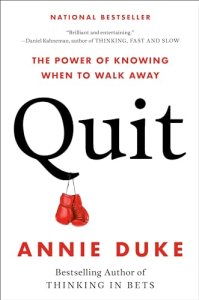
Duke, A. (2022). Quit: The power of knowing when to walk away. New York: Portfolio/Penguin.
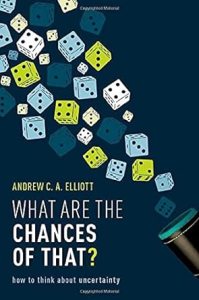
Elliott, A.C.A. (2021). What are the chances of that? How to think about uncertainty. Oxford: Oxford University Press.
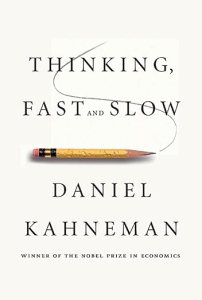
Kahneman, D. (2013). Thinking, fast and slow. New York: Farrar, Strauss and Giroux.
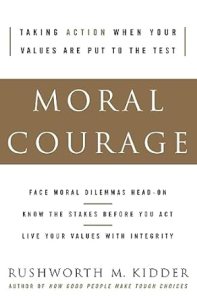
Kidder, R.M. (2005). Moral courage. New York: W. Morrow.
Schur, M. (2022). How to be perfect: The correct answer to every moral question. Hachette Australia.
